There was a time when a speaker was simply something you bought because you wanted better sound. It sat on a shelf, connected to a music system, and did its job quietly in the background.
That is changing.
Today, the products we bring into our homes are increasingly expected to do more than perform a single function. They need to fit our lifestyle, complement our interiors and, in many cases, become part of our personal aesthetic. From sneakers and watches to furniture and lighting, design has become just as important as functionality.
Speakers are entering that same space.
The rise of design-focused audio products such as MorningBlues reflects a broader shift in the way people think about music and technology. Instead of hiding technology away, modern consumers are increasingly comfortable putting it on display. A speaker can now be part of a living room's visual identity rather than an object that needs to disappear into a corner.
And for India's increasingly design-conscious consumers, that shift is particularly interesting.
From Technology to Lifestyle
For years, consumer technology was largely judged by specifications.
More power. Better connectivity. Bigger batteries. Higher resolution.
While those features still matter, the way people choose products has become much more emotional. A product needs to feel right in the space where it lives.
Think about the way we buy sneakers today. A sneaker is no longer selected purely for performance. People consider the silhouette, colour, materials, cultural relevance and how it works with their wardrobe.
The same philosophy is slowly making its way into home technology.
Modern speakers are becoming lifestyle objects. Their appearance, materials and presence in a room can matter almost as much as the sound they produce.
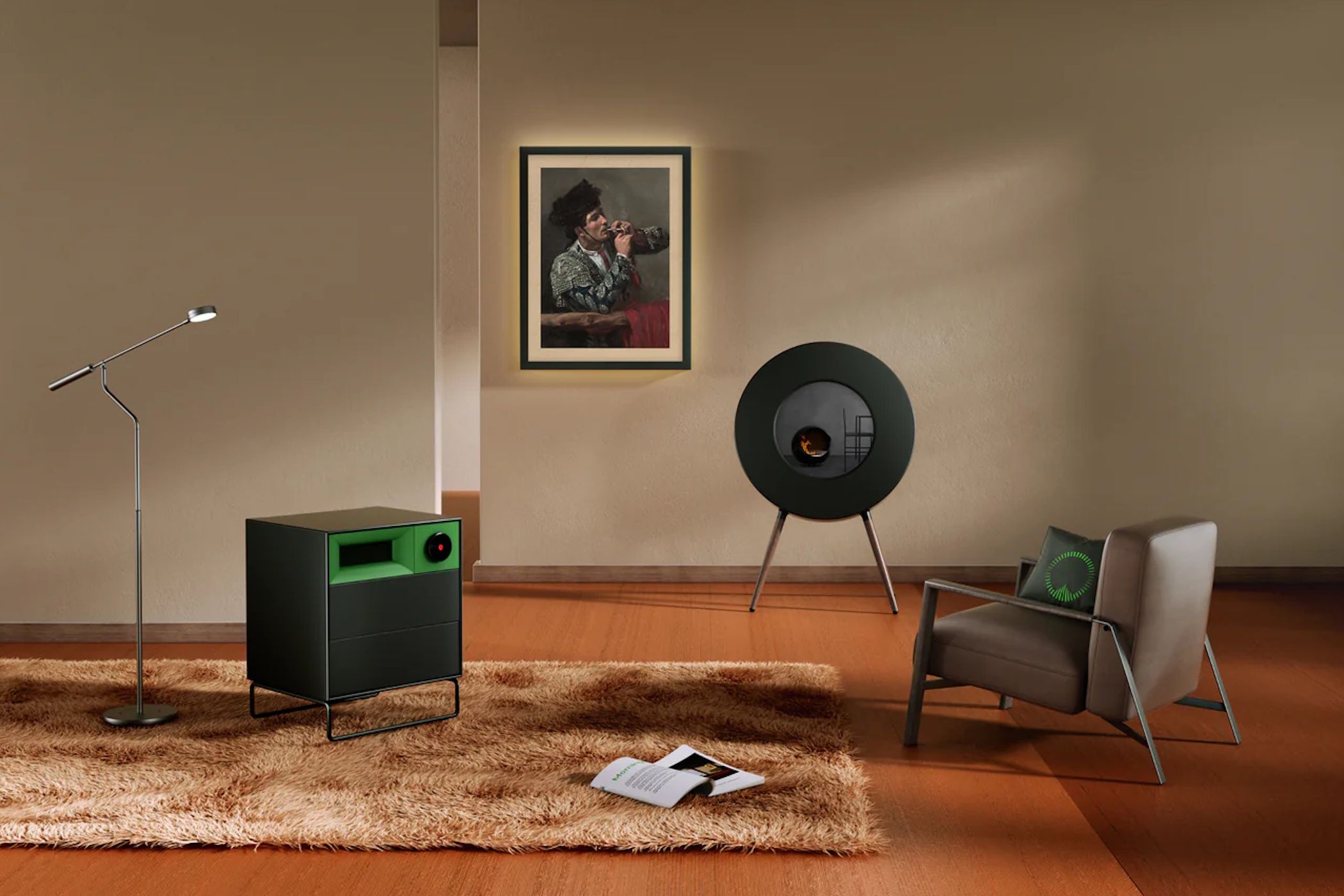 MorningBlues sits naturally within this movement, particularly with products designed to combine music, visual elements and interior-friendly design.
The result is a different relationship between the listener and the speaker.
You are not simply listening to music.
You are living with the product.
Why Design Matters More Than Ever
Indian homes are becoming increasingly expressive.
Minimal interiors, warm lighting, statement furniture, artwork, plants and carefully selected objects have become part of how younger consumers create their personal spaces.
Technology has to fit into that environment.
A conventional black plastic speaker can sometimes feel like an afterthought. A design-led speaker, on the other hand, can become part of the room itself.
This is one of the biggest changes happening in consumer electronics: technology is becoming less industrial and more personal.
Instead of asking, "What does this device do?", consumers are also asking:
"How will this look in my home?"
That question is particularly relevant for products that remain visible throughout the day.
A television is no longer just a screen. Lighting is no longer just illumination. Watches are no longer just timekeeping devices.
And speakers are no longer just speakers.
The Rise of the Statement Speaker
Statement pieces have always existed in fashion and interiors.
A pair of sneakers can completely change an outfit. A watch can become the focal point of a look. A chair, lamp or artwork can define the personality of a room.
The statement speaker follows the same idea.
Instead of blending into the background, it becomes something people notice.
This is where products like the MorningBlues Record R1 are particularly interesting. The product combines audio with a visual experience, including a large display for album artwork and lyrics, while using a retro-inspired form.
That combination creates something closer to an interior object than a traditional audio component.
It brings together two things that were historically separate: music and visual design.
Music You Can See
One of the most interesting developments in modern audio is the growing importance of visualisation.
Music has always been emotional, but digital streaming has made album artwork, lyrics and visual identity increasingly important parts of the listening experience.
MorningBlues' approach takes that idea further.
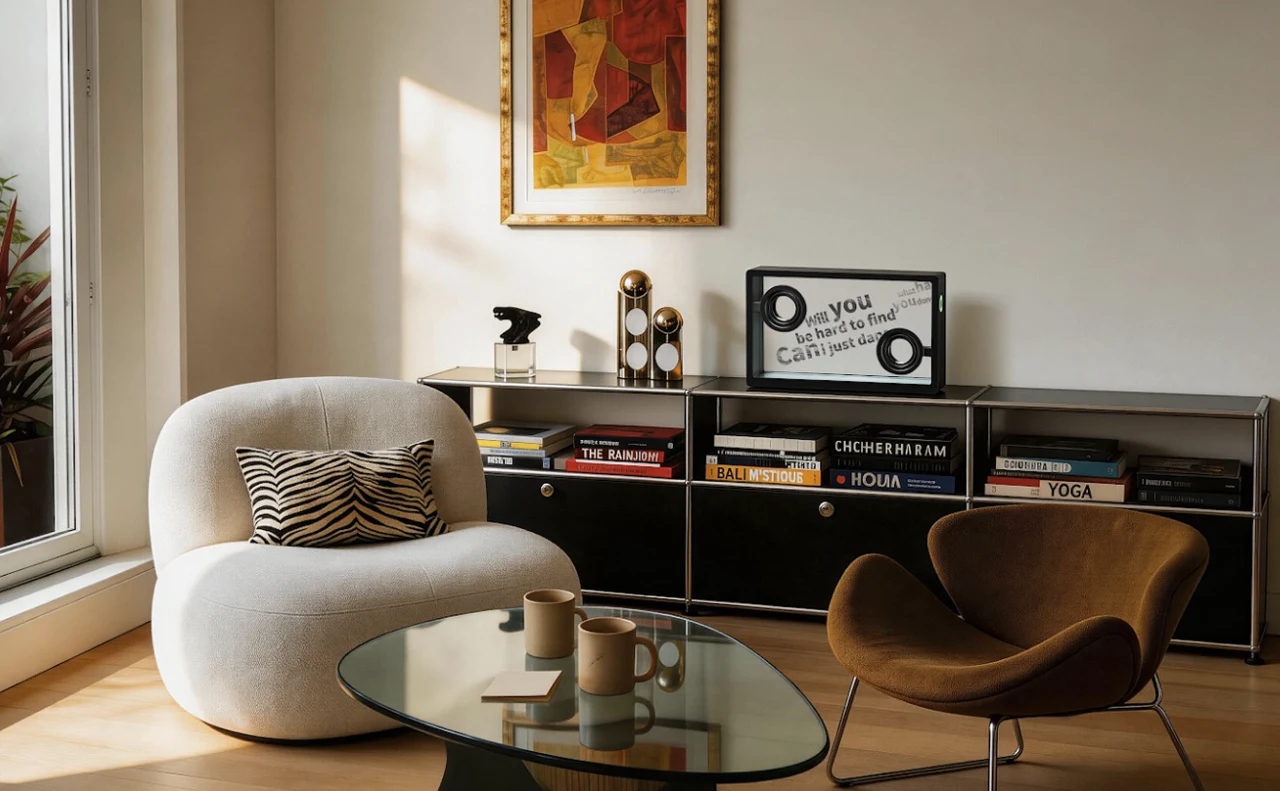
Instead of simply playing a track, a display can accompany the music with album artwork and lyrics, creating a more immersive experience. The Record R1, for example, is designed around a large anti-glare display and visual music experience alongside its audio system.
This changes the role of a speaker.
It becomes something you interact with visually as well as acoustically.
Imagine playing your favourite album while the artwork is displayed across the screen. Instead of reaching for your phone to check the song or album, the information becomes part of the room.
It is a small change, but it makes listening feel more intentional.
Why This Fits the New Indian Lifestyle
India's relationship with home entertainment is changing rapidly.
Urban consumers are spending more time thinking about how their homes look and feel. Social media has also made interiors more visible than ever.
A living room is no longer just a functional space. It can be a reflection of someone's personality.
This is especially noticeable among younger consumers who have grown up surrounded by design inspiration from Instagram, Pinterest, YouTube and global fashion and lifestyle culture.
They are increasingly interested in products that sit between technology and design.
A speaker that looks like a piece of furniture can therefore have a very different appeal from a conventional Bluetooth speaker.
It doesn't need to be packed away when guests arrive.
It can actually become part of the conversation.
The Return of Retro Design
Interestingly, the future of technology is often inspired by the past.
Vintage cameras, analogue watches, vinyl records and retro sneakers have all experienced renewed interest despite the availability of newer and technically advanced alternatives.
The reason is simple: nostalgia creates emotion.
MorningBlues' record-inspired aesthetic taps into the same feeling.
The visual language of vinyl records immediately connects music with a physical object and a different era of listening. But instead of requiring a turntable and a collection of records, modern technology can recreate some of that visual and emotional experience through digital displays and wireless connectivity.
It is essentially retro design powered by modern technology.
And that combination has become increasingly popular across fashion, interiors and consumer electronics.
 Sound Still Comes First
Of course, beautiful design alone isn't enough.
A speaker ultimately has one fundamental responsibility: it needs to sound good.
Design-led audio products therefore have to balance aesthetics with acoustic performance.
MorningBlues' Record R1, for example, combines its visual display with a Jamo-tuned 2.1-channel audio system and wireless connectivity.
This reflects an important direction for premium consumer technology.
The best products don't force consumers to choose between performance and personality.
They offer both.
That is increasingly becoming the expectation among consumers who are willing to spend more on products that they interact with every day.
The Speaker as Part of Your Routine
The most interesting technology isn't necessarily the technology we use once in a while.
It is the technology that quietly becomes part of our everyday routine.
Music is already deeply connected to daily life.
There is music during morning coffee. Music while getting ready for work. Music during workouts. Music while cooking. Music during dinner. Music when friends come over.
A well-designed speaker can become part of all those moments.
And this is where the idea of a lifestyle speaker becomes powerful.
Instead of being something you switch on only when you want louder music, it becomes part of the atmosphere of your home.
The product becomes less about volume and more about experience.
A New Definition of Premium
Premium products used to be defined primarily by materials, craftsmanship and technical specifications.
Today, premium is increasingly about experience.
People want products that look good, work effortlessly and make everyday moments feel slightly better.
That is why the premium sneaker market has moved beyond performance. It is why mechanical watches continue to attract buyers in a world where smartphones tell time. And it is why beautifully designed speakers can attract attention even when inexpensive alternatives are widely available.
The value is not only in what the product does.
It is also in how it makes you feel.
Where Audio Is Heading
The next generation of home audio will likely become even more integrated with the way we live.
Displays, smart controls, artificial intelligence, personalisation and connected-home technology are already changing how people interact with music.
But perhaps the bigger change is cultural.
We are moving away from the idea that technology should always look like technology.
The best products increasingly disappear into our lifestyle—or become beautiful enough that we actually want to see them.
MorningBlues represents an interesting example of this transition: a product category where sound, visual storytelling, nostalgia and interior design come together.
And that makes the modern speaker something very different from what it was a decade ago.
The Future Is Designed to Be Seen
The evolution of speakers mirrors a much larger change in consumer culture.
We are surrounded by products that are expected to perform well and look good doing it.
From the sneakers on our feet to the furniture in our homes, consumers increasingly want function without sacrificing personality.
Speakers are now following the same path.
The future of home audio may not be about hiding technology behind the television or inside a cabinet.
It may be about making technology worth looking at.
And that is what makes design-led audio so interesting.
Because when music becomes something you can hear, see and experience as part of your space, a speaker stops being just another electronic device.
It becomes part of the lifestyle.